If qualification is this expensive, why does a build-to-print machine shop get any aerospace work at all? Because in a build-to-print contract, the OEM has already done the hard engineering for you. It has picked the material, defined the heat-treat cycle, specified the NDT method, and carries the qualification cost itself. The supplier's job shrinks to precision execution — the "free input" here is the OEM's own process engineering, handed over as a drawing. This is why a commodity-grade machining capability still finds a real market in aerospace: someone else has already solved the hard half for that specific part, and is renting out the easy half.
The alternative — a risk-sharing partnership — inverts this. The supplier funds and owns the process development, keeps the resulting intellectual property, and is rewarded with exclusive, long-lived supply rights and a share of the programme's economics. It is a smaller, harder door to walk through, and it is the direction every serious Indian aerospace supplier in this report is trying to move, at different speeds.
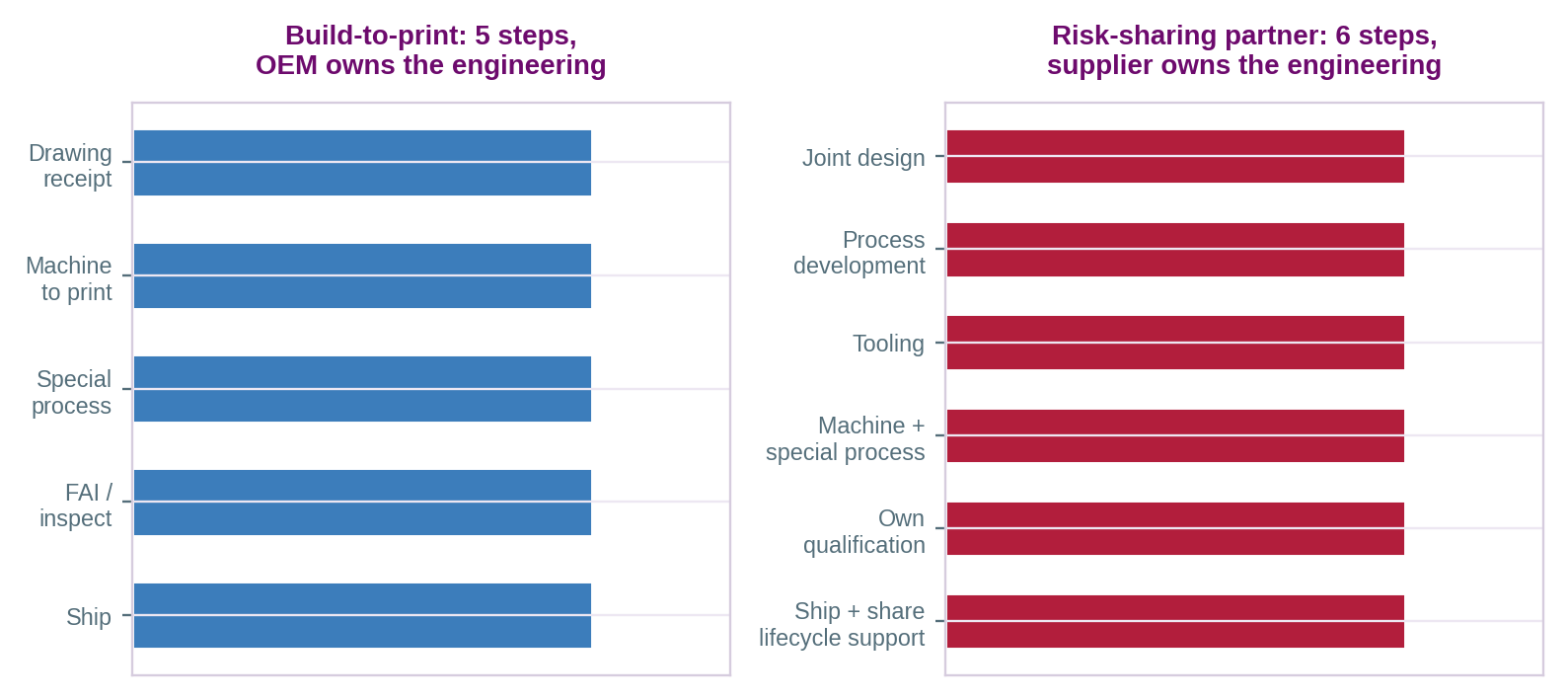
When a company report later in this document says a company is a "Tier-2/3 machining supplier," read that as: mostly build-to-print, mostly the easy half, margin will be thin and cyclical. When it says "risk-sharing partner" or names a specific Nadcap-accredited special process as core to the business, read that as: closer to the hard half, and worth asking whether the valuation already assumes the transition is complete.