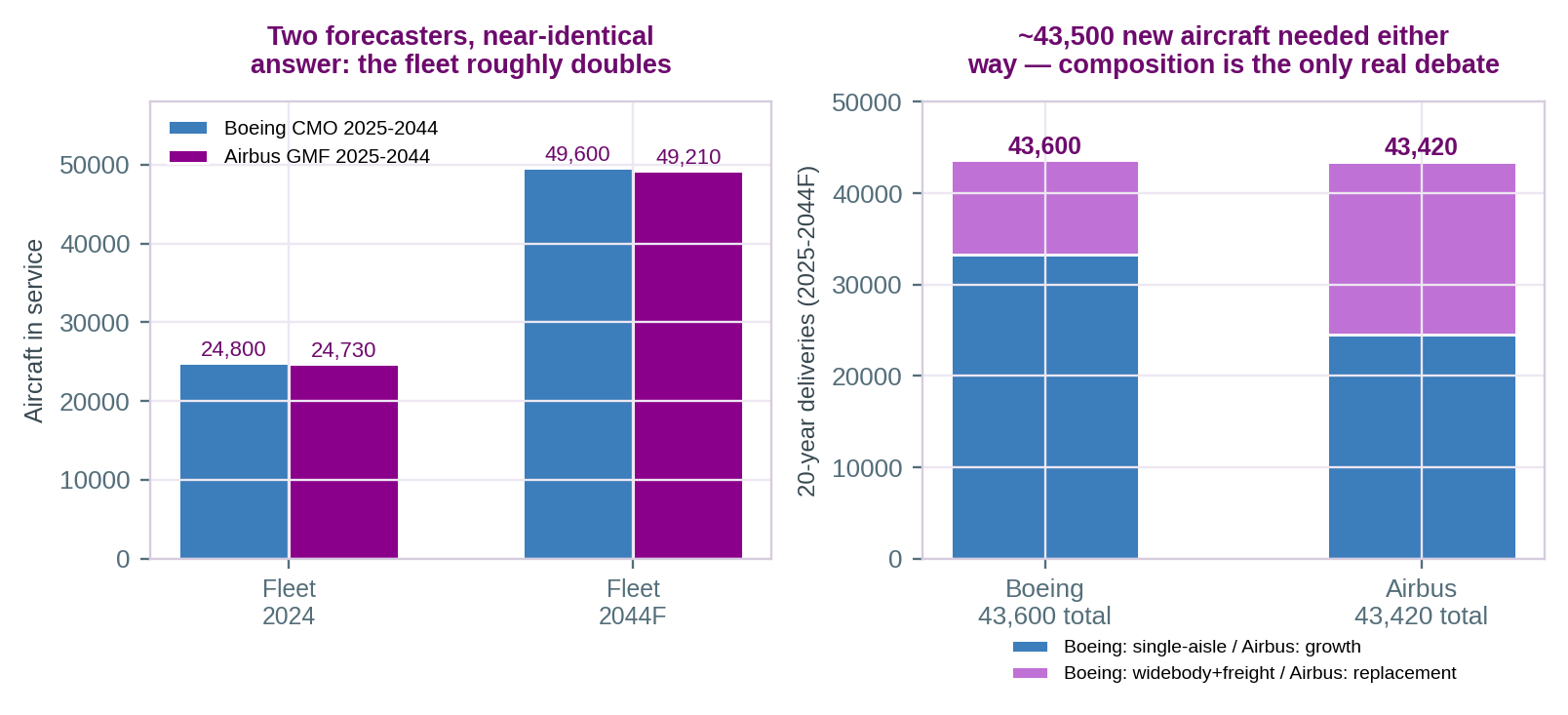
Five genuinely separate demand cycles are running at the same time here, each with its own anchor buyer and its own time horizon. Conflating them — treating "the aerospace opportunity" as one number — is the single easiest way to misread this sector.
| Demand cycle | Anchor buyer | What is actually driving it |
|---|---|---|
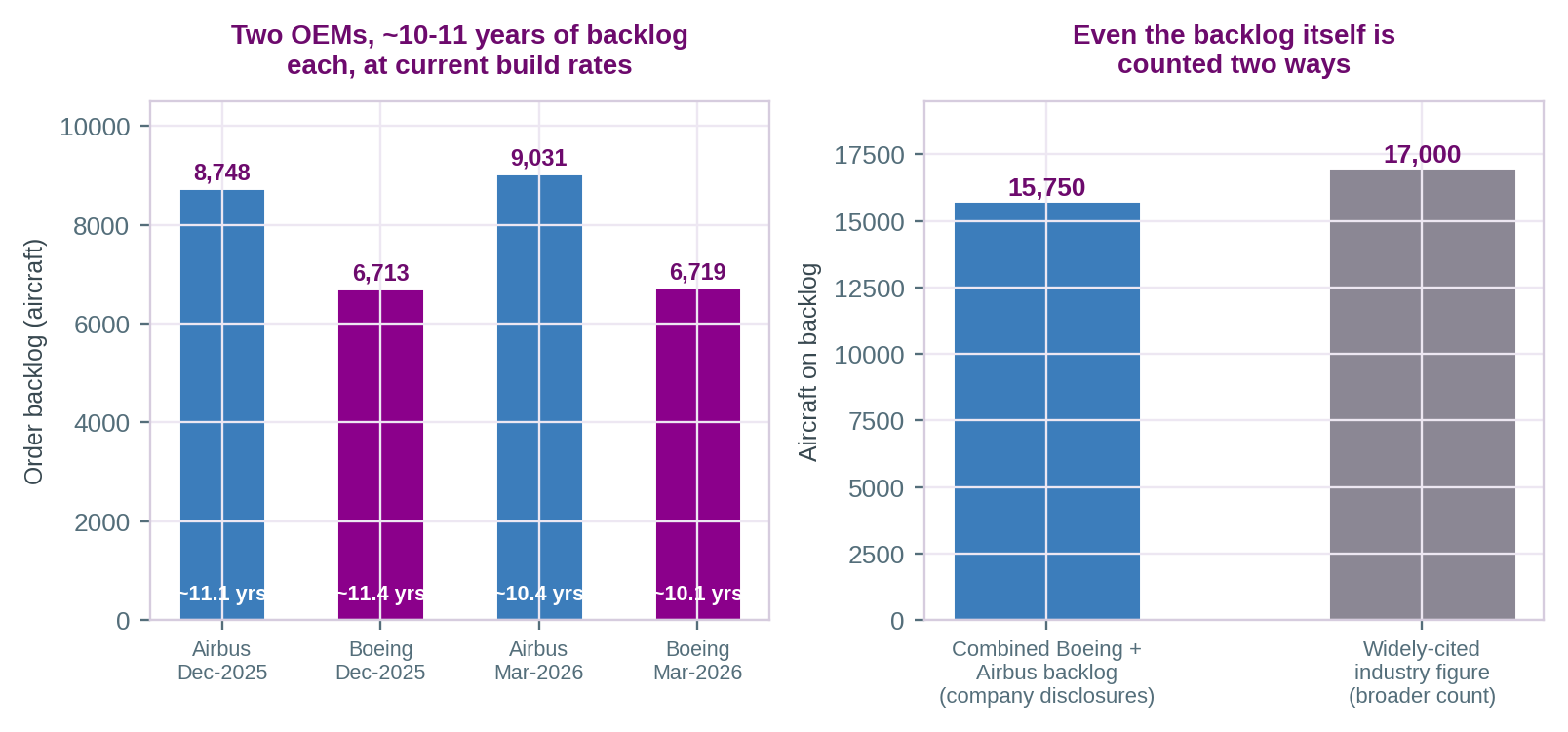
| 1. Fleet renewal & backlog | Global OEMs / airlines | ~43,500 new aircraft needed to ~2044 (Boeing + Airbus, both dated 2025); ~10-11 years of backlog already booked |
| 2. Sourcing diversification | Boeing, Airbus, Safran, Rolls-Royce | Legacy North American/European hubs face ageing skilled workforces, wage inflation and capacity limits |
| 3. India domestic fleet growth | IndiGo, Air India | Combined order books in the high hundreds to low thousands of aircraft (definitions vary by source, see below) |
| 4. Defence indigenisation | Ministry of Defence | Positive Indigenisation Lists (six issued since Aug 2020) progressively force import substitution by embargo date |
| 5. MRO & engineering-services build-out | GoI policy + global OEM GCCs | Uniform 5% GST on aircraft/engine parts (Jul 2024), 100% automatic-route FDI for MRO, India MRO market ~$2bn today targeted to ~$4bn by 2030 |
Source: Dart Consultants, compiled from Boeing CMO 2025-2044, Airbus GMF 2025-2044, zetwerk.com/Boeing-Airbus sourcing summaries, safran-group.com (26 Nov 2025), MoD Positive Indigenisation List notifications, and trade.gov/newsonair.gov.in GST-FDI policy summaries — see Notes for full citation list.
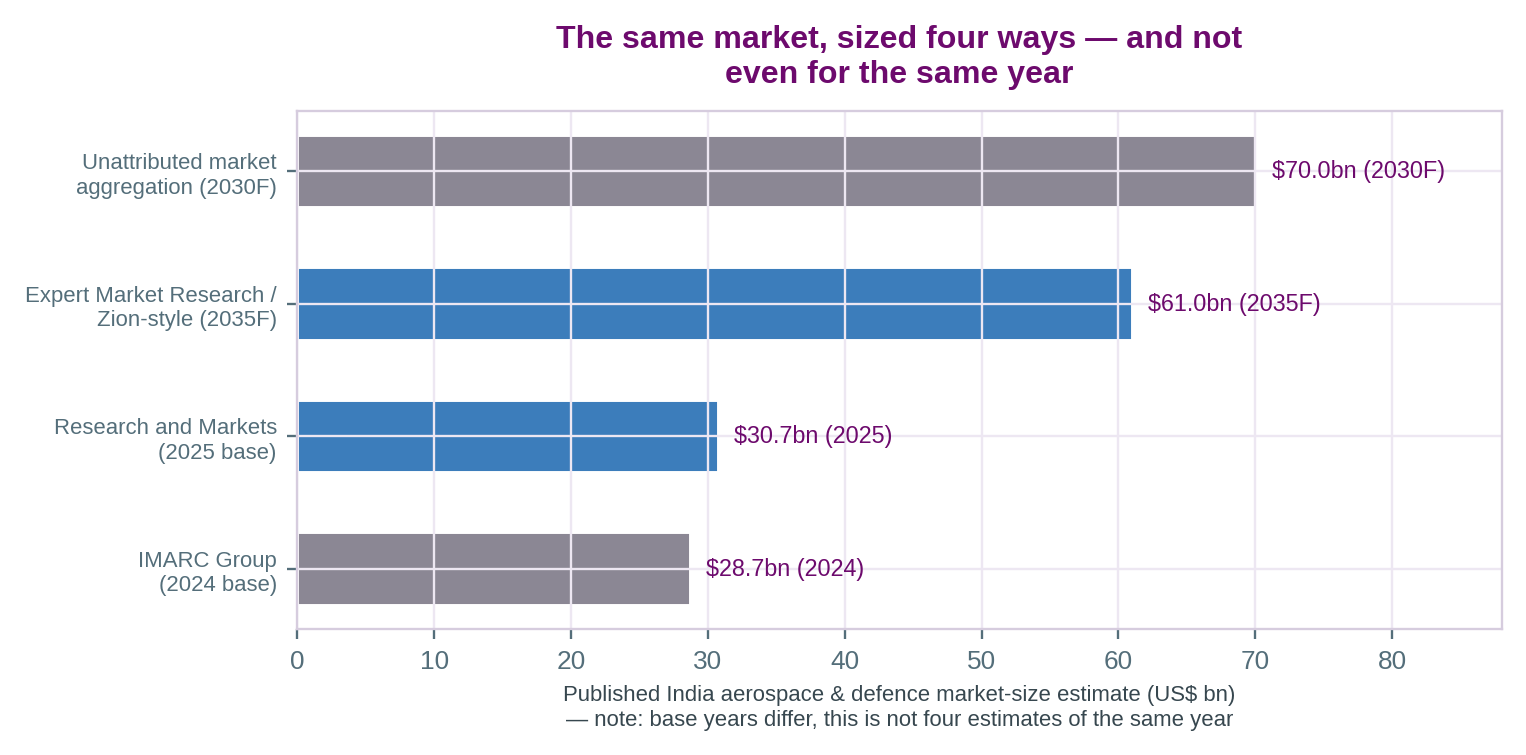
Every published "India aerospace and defence market size" figure in circulation uses a different base year, a different scope, and often a different definition of what counts as "aerospace." Four research-house estimates for this single market are shown below; they are not four estimates of the same number, and reporting only the largest or the newest without saying so would be the exact failure mode this report exists to avoid.