The industry describes a company two different ways, and the two descriptions do not always point to the same conclusion. The first is tier nomenclature — Tier-1 (engines, aerostructures, landing systems, avionics), Tier-2 (modules and assemblies), Tier-3/4 (forgings, castings, machining, sheet metal, raw material) — which describes a company's position in the OEM's org chart. The second is process classification — build-to-print, special-process-holder, or risk-sharing partner (§1, §4) — which describes what a company actually keeps versus rents out. A company can be a "Tier-1" by customer-facing label and still be doing mostly build-to-print work; a "Tier-4" raw-material or special-process house can hold more real pricing power than the Tier-1 above it, if what it holds is scarce.
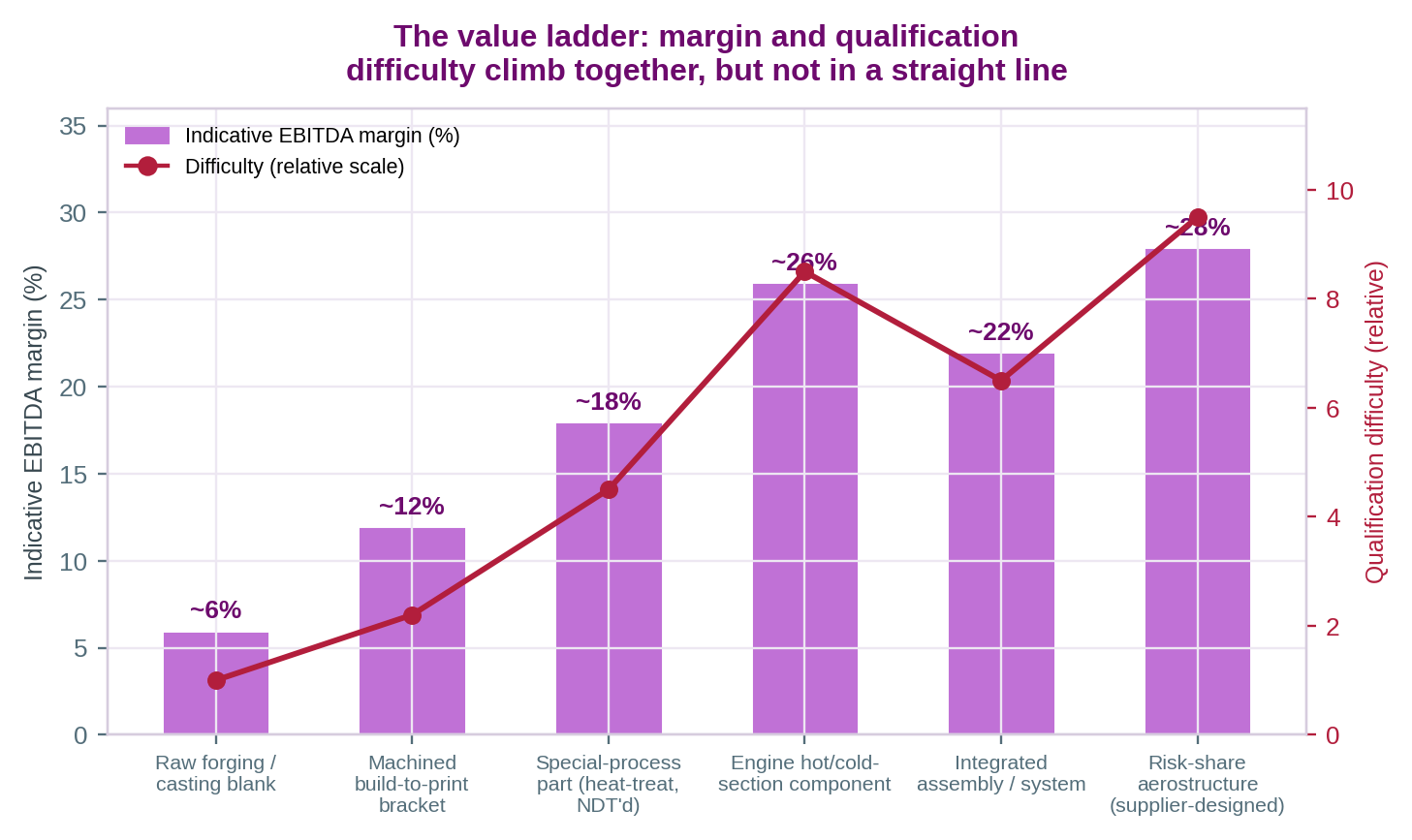
Tooling is the clearest case. A jig or fixture is not a "Tier" anything in the OEM org-chart sense — it never flies — yet a company that holds the only qualified fixture design for a specific engine programme's overhaul cycle can have more durable pricing power than a much larger structural-parts supplier making a simple, price-competed panel. Size and tier rank do not reliably predict margin in this industry; process scarcity does. Keep this in mind through §9 — market capitalisation and revenue scale, on their own, tell you almost nothing about where a company actually sits on the ladder above.
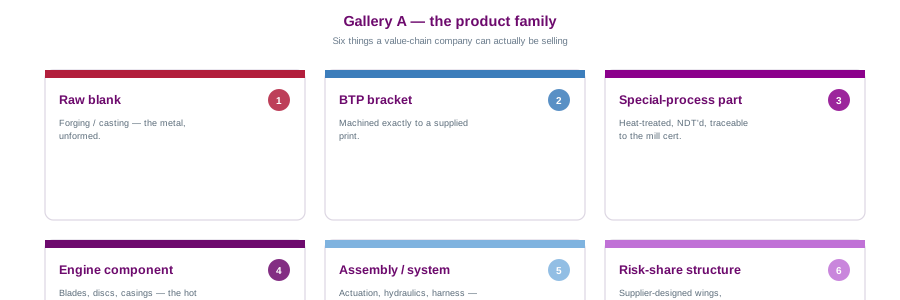
What a value-chain company can actually be selling, arranged from commodity to engineered.
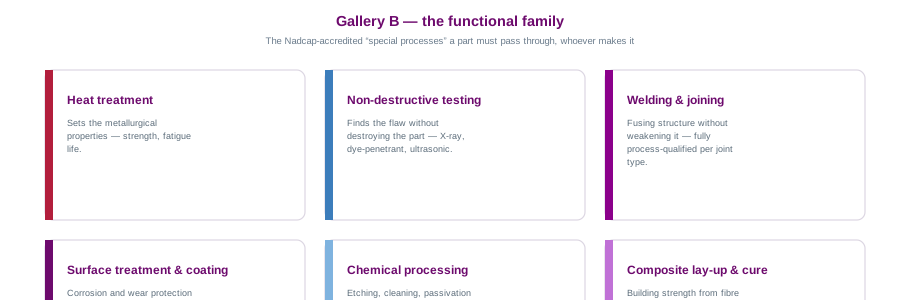
The Nadcap-accredited special processes a part must pass through on its way up that ladder, whichever company happens to be holding it at the time.